A commitment ceremony gives you the freedom to stand together, speak your promises and celebrate the relationship you have chosen, without entering into a legal marriage. There is no Notice of Intended Marriage, marriage certificate or government registration. Loretta will listen to what matters to you both and write a ceremony that sounds like you, whether the day is shared with a room full of loved ones or held quietly with just a few special people.
Key takeaways
- No legal paperwork: no NOIM, no marriage certificate and no government registration involved.
- Suits couples already married elsewhere, not ready for the legal step, or choosing not to register a marriage at all.
- Every element, from vows to rituals to who takes part, is yours to choose.
- You can still hold a legal wedding later; a commitment ceremony doesn't affect that separate process.
- Loretta shapes the wording and leads the day so you can stay present with each other.
What Loretta helps you create
Your ceremony begins with a conversation about your relationship, the promise you want to make and the people you want beside you. Loretta then helps shape the ceremony, write the wording and bring its separate moments together, from your welcome and story to vows, readings and rituals. On the day, she leads the ceremony with warmth and clarity so you can stay present with each other.
What can you choose in a non-legal ceremony?
You can choose everything about a non-legal ceremony, from the words spoken to who takes part, because there is no required script, legal wording, NOIM or government registration involved. You may exchange vows and rings, involve children or friends, include a ritual, or keep the moment between the two of you alone. Loretta helps you decide what feels meaningful and what can be left out.
Is a commitment ceremony right for you?
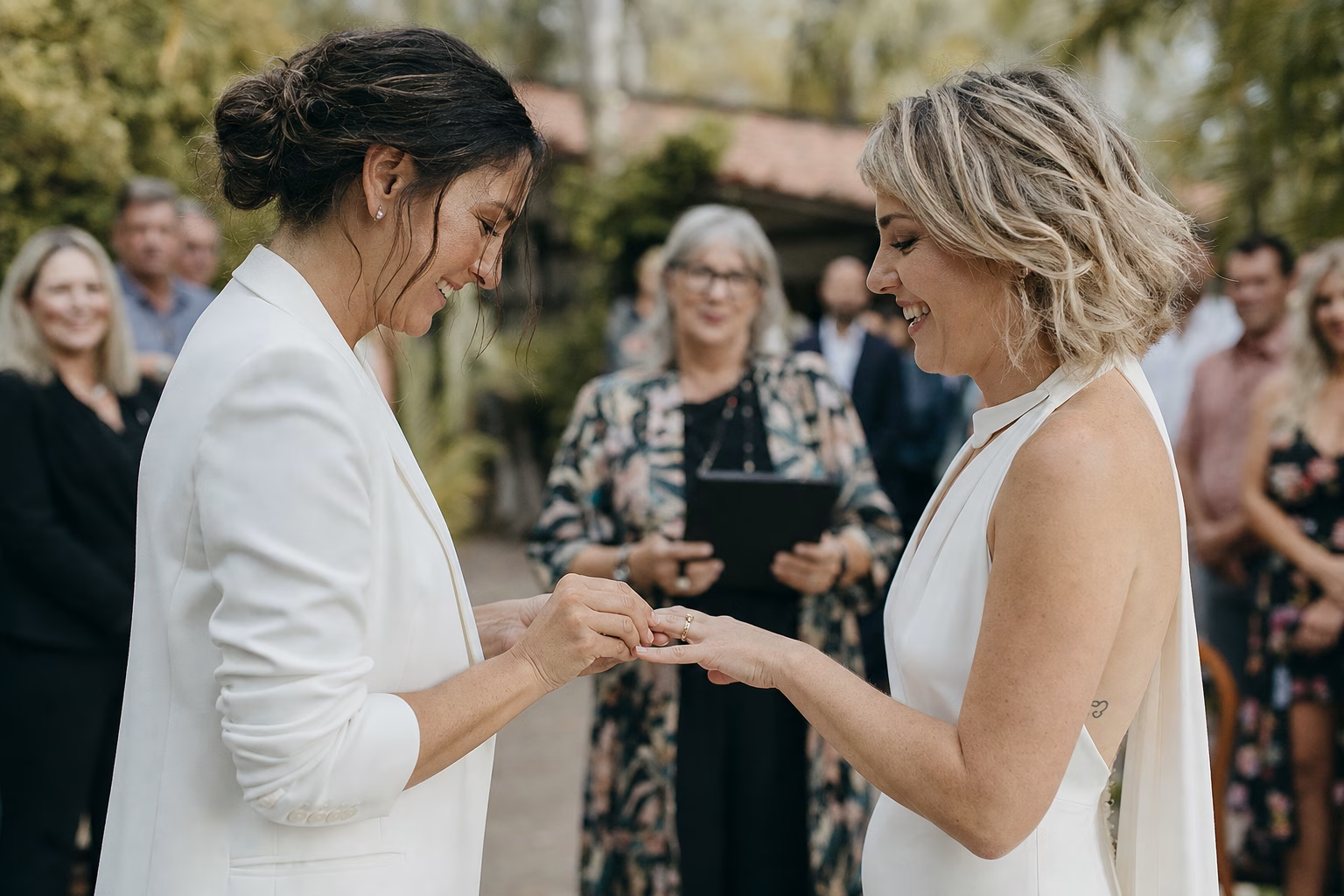
A commitment ceremony is right for you if you want to publicly promise yourselves to each other without creating a legal marriage, for whatever reason brings you to that choice. Common situations include:
- Already legally married elsewhere. Some couples sign the legal paperwork quietly, perhaps overseas or in a registry, then hold a full ceremony back home for family and friends.
- Not ready for the legal step. A couple may want to publicly commit now and handle the legal marriage later, or keep the two separate on purpose.
- A conscious choice against legal marriage. Some couples are deeply committed but choose not to register a marriage with the state, for personal, philosophical or financial reasons.
- Renewing or deepening an existing bond. Long-term partners who never married sometimes want to mark their commitment formally after many years together.
Choose a commitment ceremony when you are making or affirming a commitment without creating a legal marriage. Choose a vow renewal when you are already married and want to revisit your wedding promises. Choose a legal wedding ceremony when you want the occasion to create a marriage recognised under Australian law.
How your commitment ceremony can unfold
There is no compulsory order, so planning starts with the feeling you want to create. Loretta will help you decide whether guests need a clear explanation that the ceremony is non-legal, where your personal story belongs, who should take part and which moments deserve room to breathe. She can also help you simplify the running order when young children, nervous speakers, outdoor conditions or a private legal marriage need to be considered.

From there, the ceremony can take shape along these lines, though you and Loretta can move, merge or drop any part:
- Welcome and acknowledgement. Loretta greets your guests and sets the tone, warm and personal rather than formal.
- Your story. A short account of how you met and what brought you here, drawn from your own words during planning.
- Readings or music. Chosen by you, read by people who matter to you.
- The promises. Vows you write together or with Loretta's help, spoken to each other.
- A symbolic ritual. Optional, to give the promise a physical action.
- The pronouncement and celebration. A closing that names your commitment and sends everyone into the celebration.
The length depends on the story, readings and rituals you choose. Loretta can help shape a ceremony that feels complete without becoming drawn out.
Commitment ceremony or legal wedding?
The difference between a commitment ceremony and a legal wedding is legal, not emotional: only one of them creates a marriage recognised under Australian law, and the two can otherwise look identical on the day. For a legal marriage, an authorised celebrant must include the statements and vows required under the Marriage Act 1961 and submit the required marriage paperwork. A commitment ceremony carries none of that: nothing is filed, nothing is registered, and no certificate is issued by a government body.
| Commitment ceremony | Legal marriage | |
|---|---|---|
| Notice of Intended Marriage (NOIM) | Not required | Required, generally lodged at least one month before |
| Legal wording | None prescribed, fully yours | Required statements and vows apply |
| Official marriage record | None | The marriage is registered; an official certificate can be ordered from the relevant registry |
| Witnesses | Optional, your choice | Two witnesses over 18 required |
| Vows and structure | Personalised, your choice | Personalised around the required legal parts |
| Legal marital status | No change | Changes to married status |
Marriage registration and certificates are administered by the relevant state registry of births, deaths and marriages, and the legal wording required for a marriage ceremony is set out under the Marriage Act 1961. If you think you may want the legal marriage as well, it is worth understanding Queensland timing early. Loretta's guide on when to lodge your NOIM in Queensland and the NOIM deadline checker explain the one-month notice rule that applies to legal weddings, so you can plan the two paths without surprises.
How do you choose the words, people and setting for your ceremony?
Loretta chooses the words, people and setting for your ceremony by first getting to know the two of you: how you met, what this promise means and how you hope the moment will feel. Together, you can choose the stories, words and people that belong in the ceremony, without adding traditions that don't feel like you.
For an outdoor ceremony, Loretta will ask about shelter, guest access, sound and any venue or council requirements that apply to your chosen site. Coastal wind can affect candles, loose readings and amplified sound, while private homes and gardens may need a simple plan for guest seating and wet weather. Confirm the venue and travel arrangements with Loretta when enquiring, and see her guide on planning a weather-proof outdoor wedding if you're set on an outdoor ceremony.
What rituals can reflect your relationship?
Symbolic rituals turn a spoken promise into something you can see and hold, and the right one usually depends on who's in the room and how much time you have. Popular choices include:
- Handfasting: binding your hands together with cords or ribbon, the origin of the phrase "tying the knot."
- Ring exchange: the same gesture as a wedding, without the legal register.
- Candle ceremony: lighting a shared candle from two individual flames.
- Sand ceremony: pouring separate colours of sand into one vessel, a favourite when children are part of the family.
- A shared reading or letter: exchanging private letters to be read on the day or sealed for a future anniversary.
Choosing between them is part of the planning conversation. A sand ceremony travels well outdoors and holds up in wind, since there's no flame to protect, which is why it often suits a beach or hinterland setting. A candle ceremony reads beautifully indoors or somewhere sheltered, but needs a wind-free spot to stay lit. In Loretta's experience, families with young children most often gravitate toward the sand ceremony or a shared reading, since both give little hands something safe to hold. For blended families, symbolic unity rituals for blended families has ideas worth borrowing, particularly rituals that give children an active part in the promise.
Hear from couples Loretta has celebrated with
Loretta is glad to share the experiences of couples she has celebrated with, with their permission, so you can get a feel for how a commitment ceremony might unfold for you.
Frequently asked questions
Is a commitment ceremony legally binding? No. It creates no legal marriage, changes no legal status, and no certificate is registered. It is a ceremony of promise, not a legal act.
Do we need witnesses or a NOIM? No. A Notice of Intended Marriage and the two-witness requirement apply to legal marriages only. You can invite whoever you like, or hold the ceremony privately.
Can we still exchange rings and vows? Yes. Rings, vows, readings and rituals are all yours to include. Many commitment ceremonies are indistinguishable from a wedding to a guest watching.
Can we have a legal marriage later? Yes. A commitment ceremony does not affect a future legal marriage. If you decide to marry legally, that is a separate process with its own paperwork and one-month notice period in Queensland.
Can children be part of the ceremony? Absolutely. Rituals like the sand ceremony are often chosen precisely so children can take part in the promise the family is making.
Tell Loretta about your date, place and promise
Tell Loretta your preferred date, ceremony location and what you hope to celebrate. She will use those details to begin a thoughtful conversation about the words, people and moments that belong in your ceremony. Enquire about a commitment ceremony.